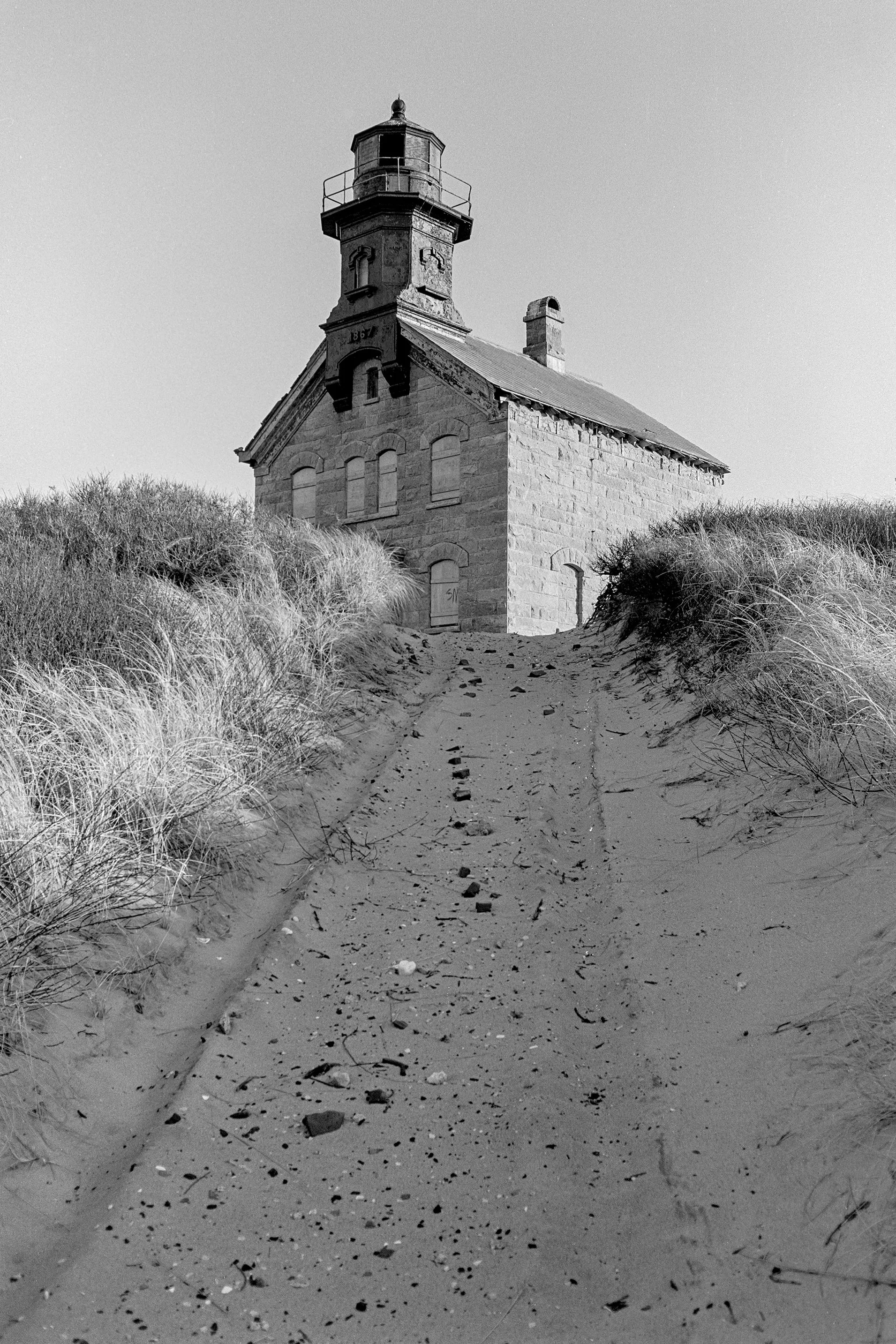
There’s something about winter on Block Island.
The crystalline light slants low and shadows are long. The land is lashed by the wind. You sometimes have to turn away to catch your breath.
We’re drawn to this place of extremes—to what is revealed by winter’s brutality and hard light; to the paradox of a place built for warm summer afternoons, momentarily frozen solid; and to a kind of haunting: the ghosts of summer, of the Victorians, the farmers and fishermen, the stone wall builders, the Manisses and the rippling land, dropped like unfinished work by retreating ice, 15,000 years ago.
William Faulkner wrote that “the past is never dead. It’s not even past.” In winter, the past is laid bare on Block Island. We wanted to honor that past by finding beauty in its state of suspension, its endurance, decay, and strivings.
This exhibition looks at Block Island winters at two points, roughly 50 years apart. Most of the pictures were taken in the early and late 1970s. Then, in the winter of 2025–2026, we revisited and reshot selected locations.
More has changed than not changed, of course. Horizons are more cluttered with houses, and the low, nearly treeless brush has been replaced with taller growth. The island is another 50 years further removed from farming.
The tension between development and land preservation is palpable. Swaths of land in trust preserve what is dear to many—and drives up the cost of remaining developable land. Islanders will continue struggling to balance saving what draws people to the island with what can destroy it.
What will the next 50 years bring? Sea level is projected to rise another one to two feet. The cliffs will continue to erode, and the island will continue to accrete northward. Trees will form an ever-taller canopy; vistas will be shorter and the horizon even more punctuated with construction.
And still, the raw light, the hard wind, the salt air, and the ghosts—they will remain.
A 50-Year Retrospective
James M. Kent and Eric W. Baumgartner, 2026
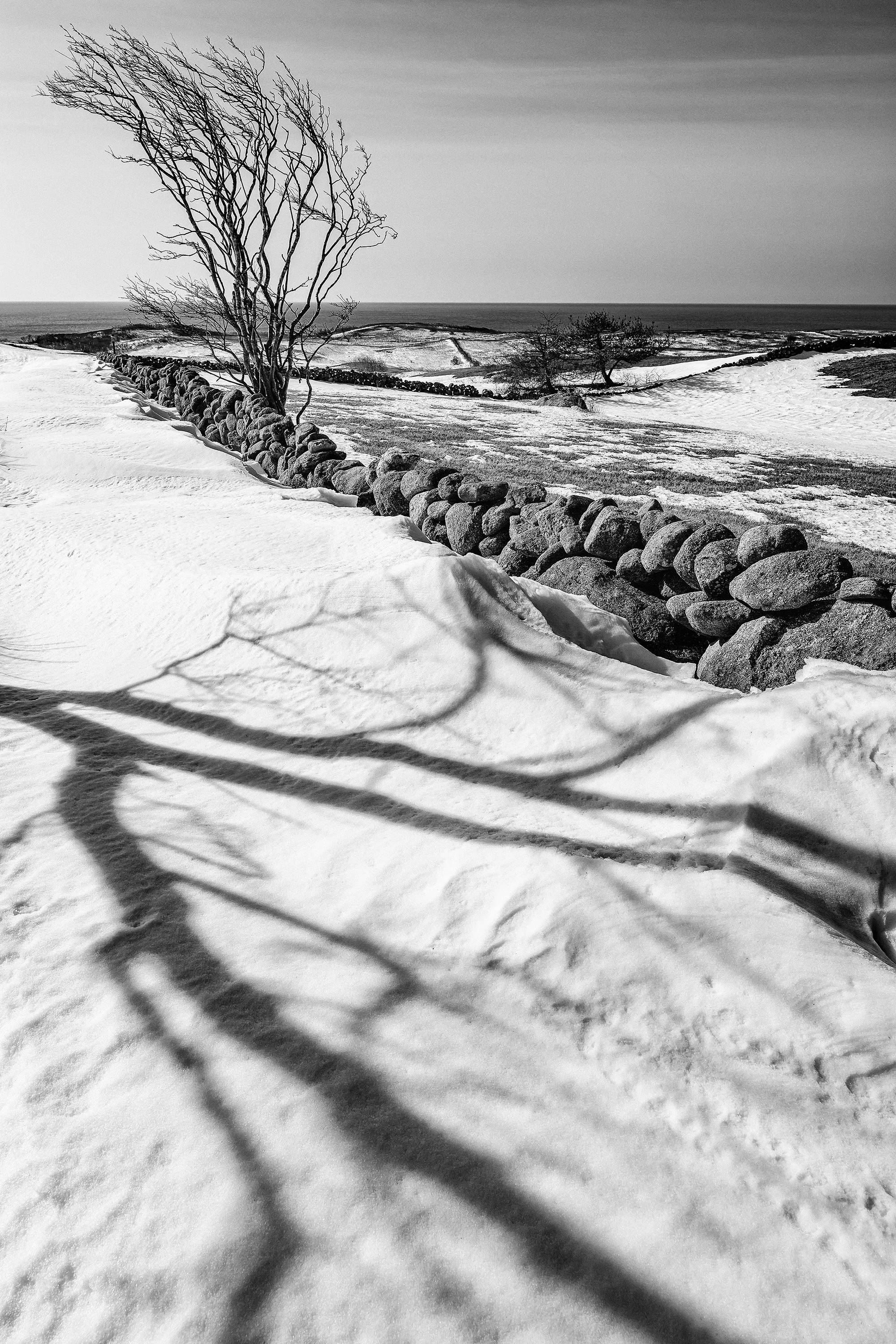
Winter Shadows, Lewis Farm, 2026
Our Thanks
Our photography on Block Island was supported by the encouragement and assistance of many people. Our project never would have happened without the dedication of George Mott, curator extraordinaire of the Block Island Life Facebook page. There, often with George’s input, we crowd-sourced information about many photos to learn their backstories, enriching their meaning. We thank Paige Gaffett and Eileen Miller for their enthusiasm about a few photos Jim published on the Block Island Life page, which led to an invitation to show at the Spring Street Gallery in 2026. Robert Downie’s books on Block Island also served as valuable sources of history and context.
We are particularly indebted to the former head of the Island Free Library, Sandy Gaffett, who took a phone call from two college kids in 1977 who wanted to mount a photo show in the library. “We’ve never done that,” she said. “But sure, why not?” That gave legs to our first photo essay, Block Island Winter, 1977–1978, some of which is reprised here.
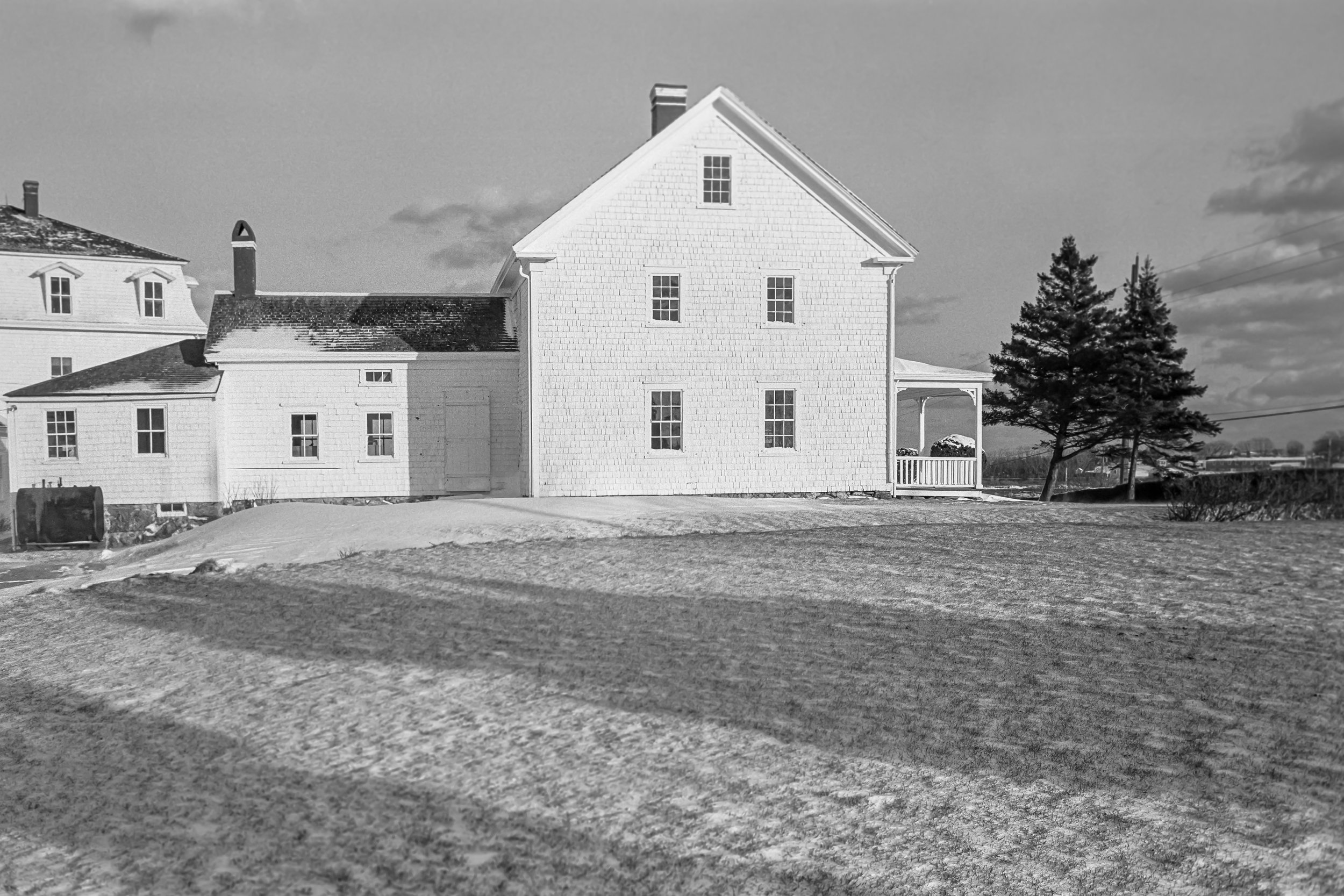
West of the Narragansett, 1978
Who We Are
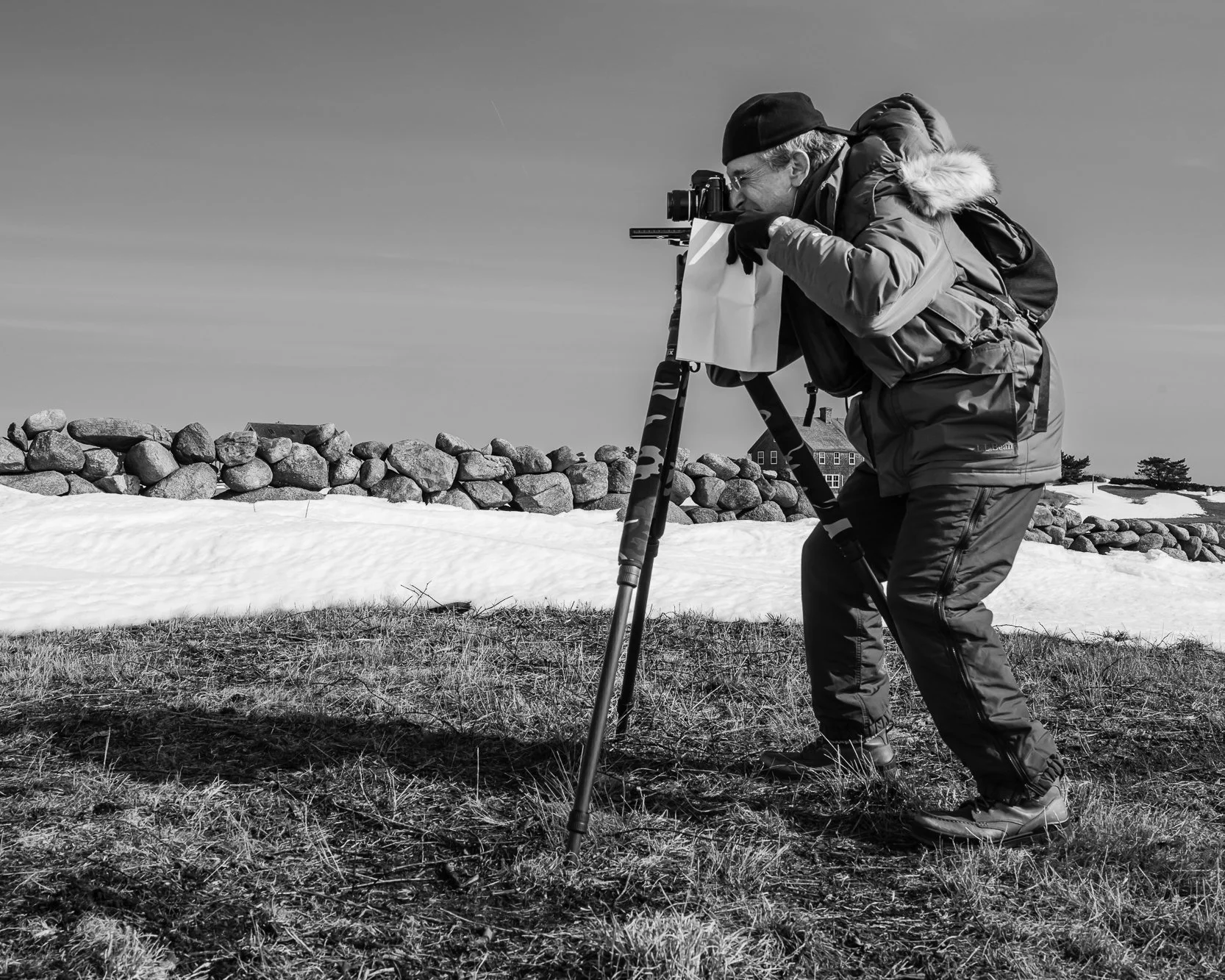
James Kent first photographed birds in his backyard with his mom’s Kodak Brownie box camera when he was eight years old. In eighth grade he built a darkroom and started creating photo essays. Among the first was an essay on Block Island in the winter of 1974. As part of his love of the coast, he coauthored, with Peter Patton, A Moveable Shore: The Fate of the Connecticut Coast (Duke University Press, 1992). He and his wife, Migdalia Cruz, live in Irvington, New York.
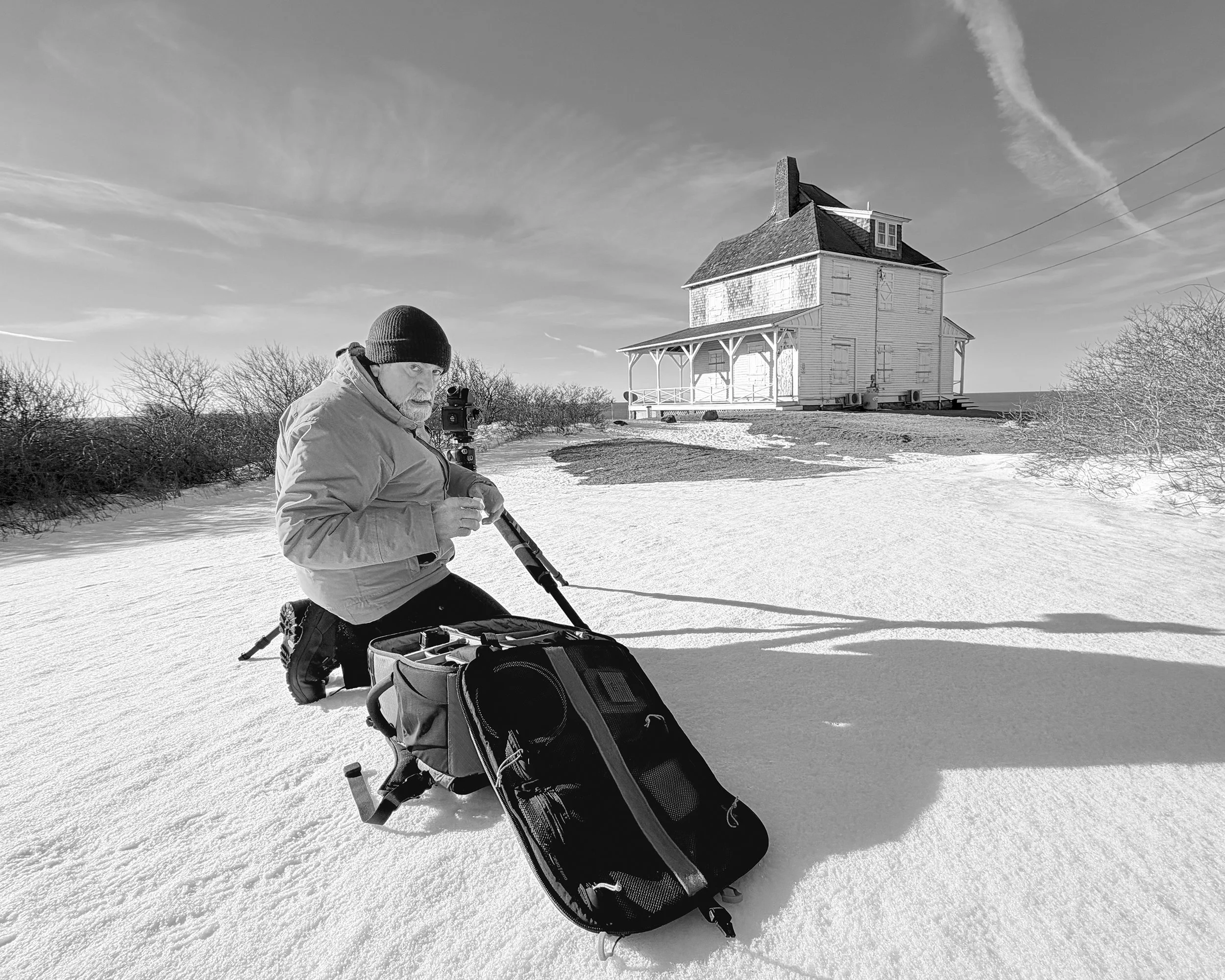
Eric Baumgartner started photographing during summer family vacations to Switzerland, first with a Kodak Brownie and later with an SLR and one 50-mm lens. He has worked in the American art world for more than 40 years and is currently senior vice president at Hirschl & Adler Galleries, New York. A lifelong passion for railroads has led him to serve on the acquisitions committee and board of the Center for Railroad Photography & Art in Madison, Wisconsin. He and his wife, Katherine, live in Redding, Connecticut.
Jim and Eric have been friends since Mrs. Vandenburg’s first grade class and began a photography business in junior high school, shooting school sporting events, plays, and musicals. They first collaborated on a photo essay on Block Island in 1977–78. This is their second collaboration on the island.