Stories behind the Photographs
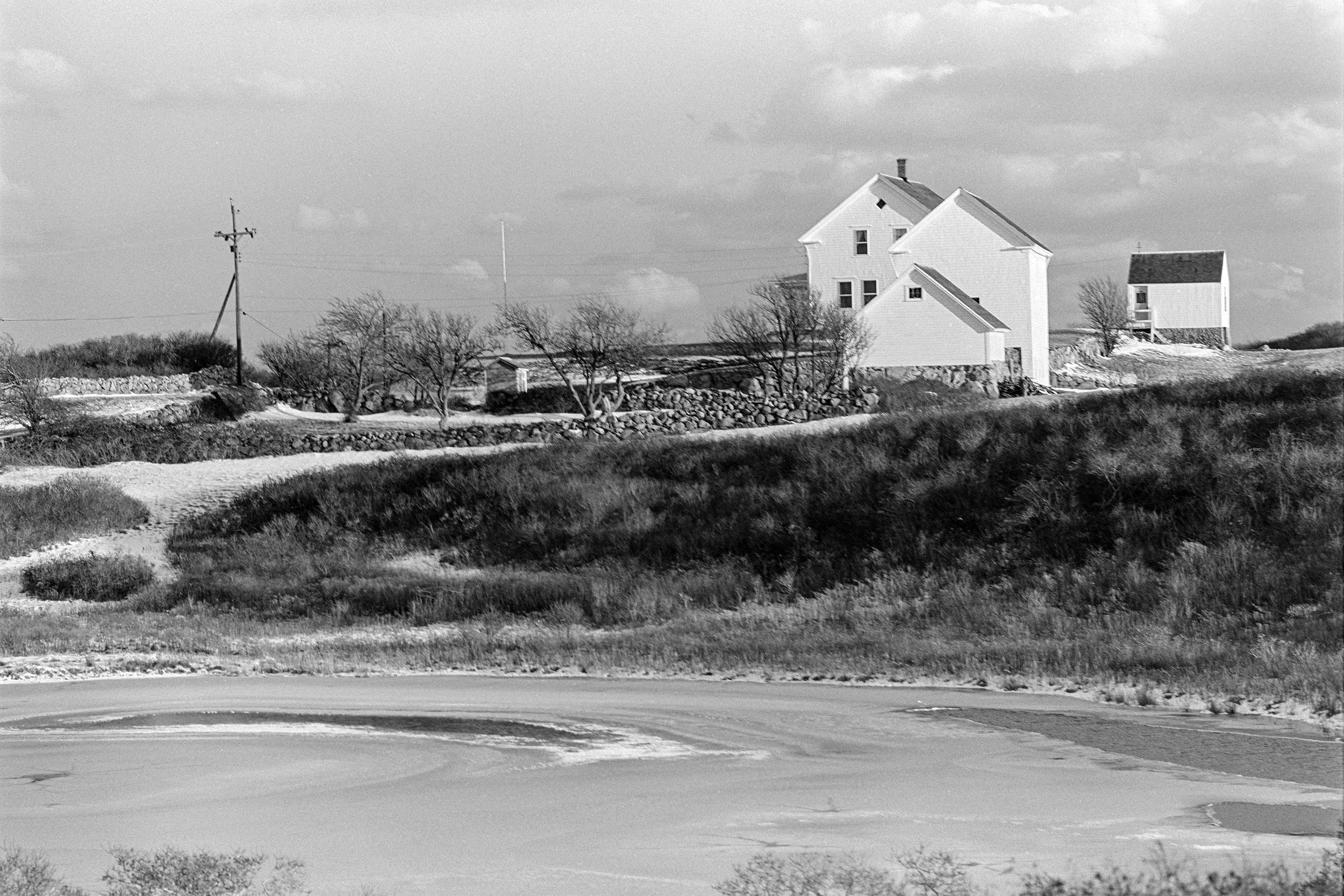
Ball Homestead and Tea Room Pond, 1978. Homestead of Hamilton Mott Ball (1849–1933), West Side Road. Sam Bird built the structure to the far right. It was framed with hackmatack, which was so hard, he said, it was impossible to drive a nail into it. The outbuildings now have only white trim, and this view toward the northeast is largely hidden by trees. The pond was a favorite ice-skating spot.
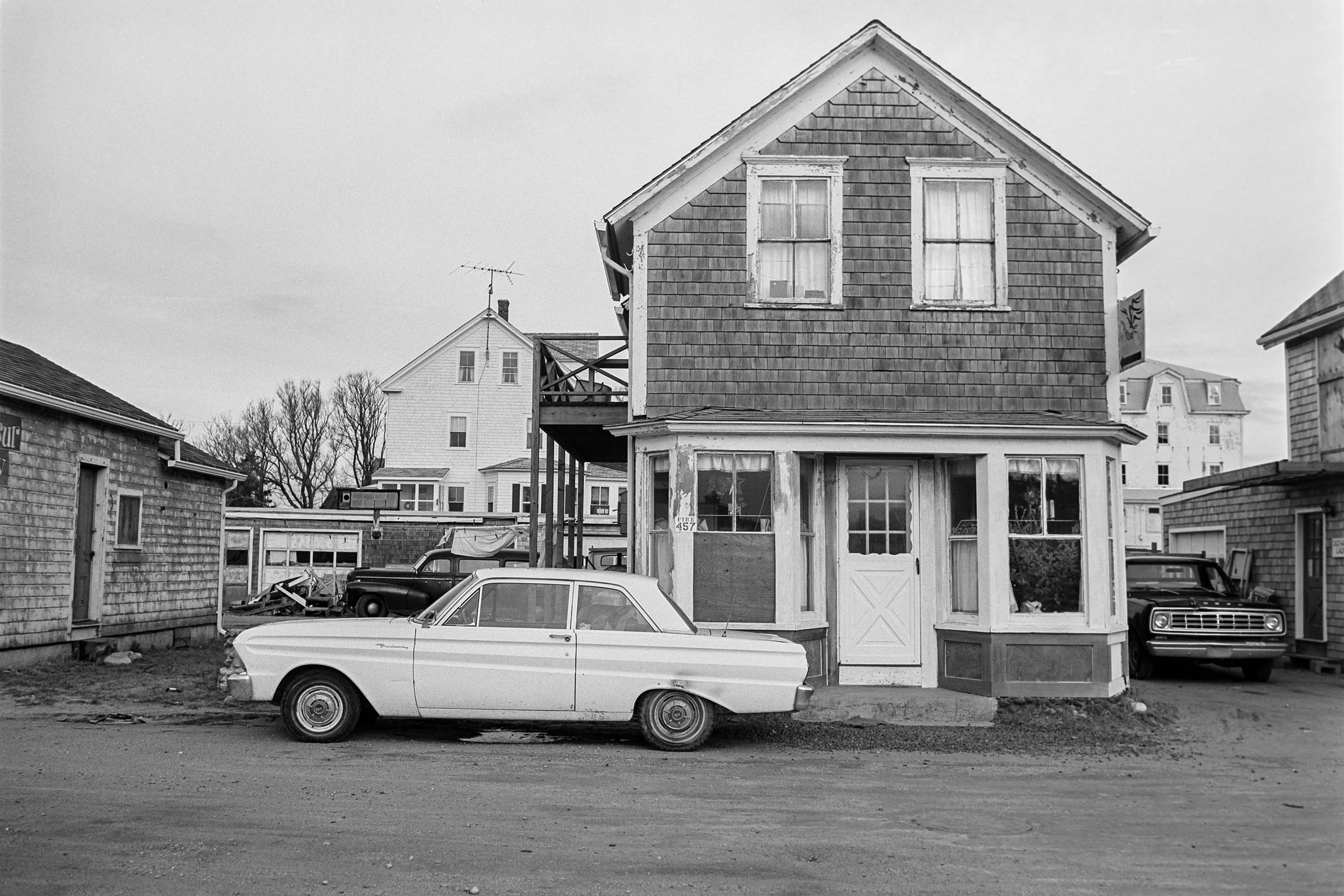
Ruthie’s, 1977. Ruth Vann and her daughters lived upstairs from this tiny breakfast place, called The Kitchen, she ran on Chapel Street in the heart of town. There might have been six tables. In 1977, Ruthie’s was one of the few places open in the winter. The bay window seat was next to a toasty radiator. The space has gone through many iterations since then, and we’re not sure what happened to Ruthie’s Ford Falcon.
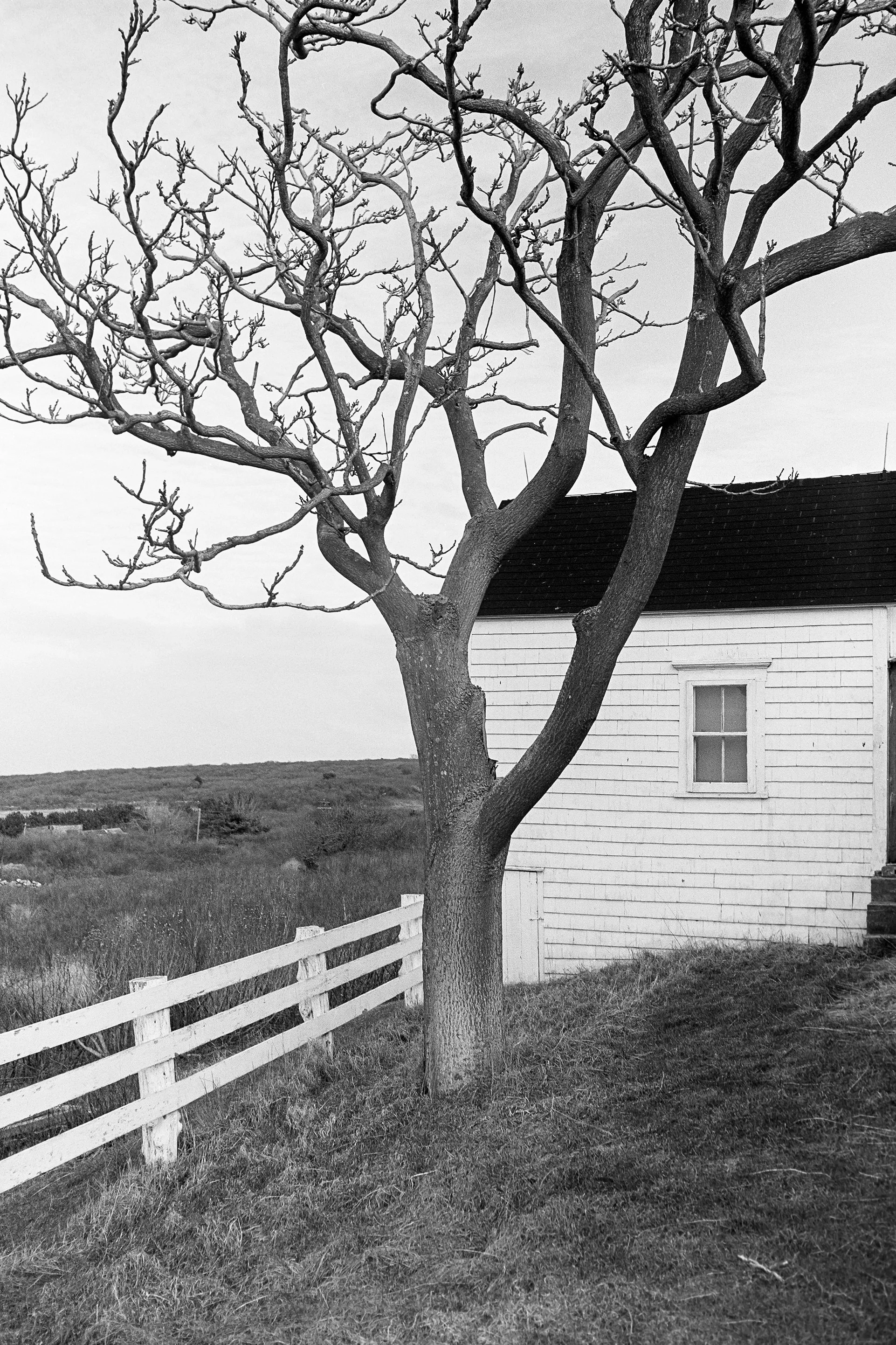
South of Sachem Pond, 1977. Edna Sheffield’s house off Corn Neck Road burned to the ground in 1985, when a gust of wind blew over a charcoal grill onto the wood deck. Doug MacDougall cut down the tree in 1989 to make space for a new deck that was part of the replacement structure.
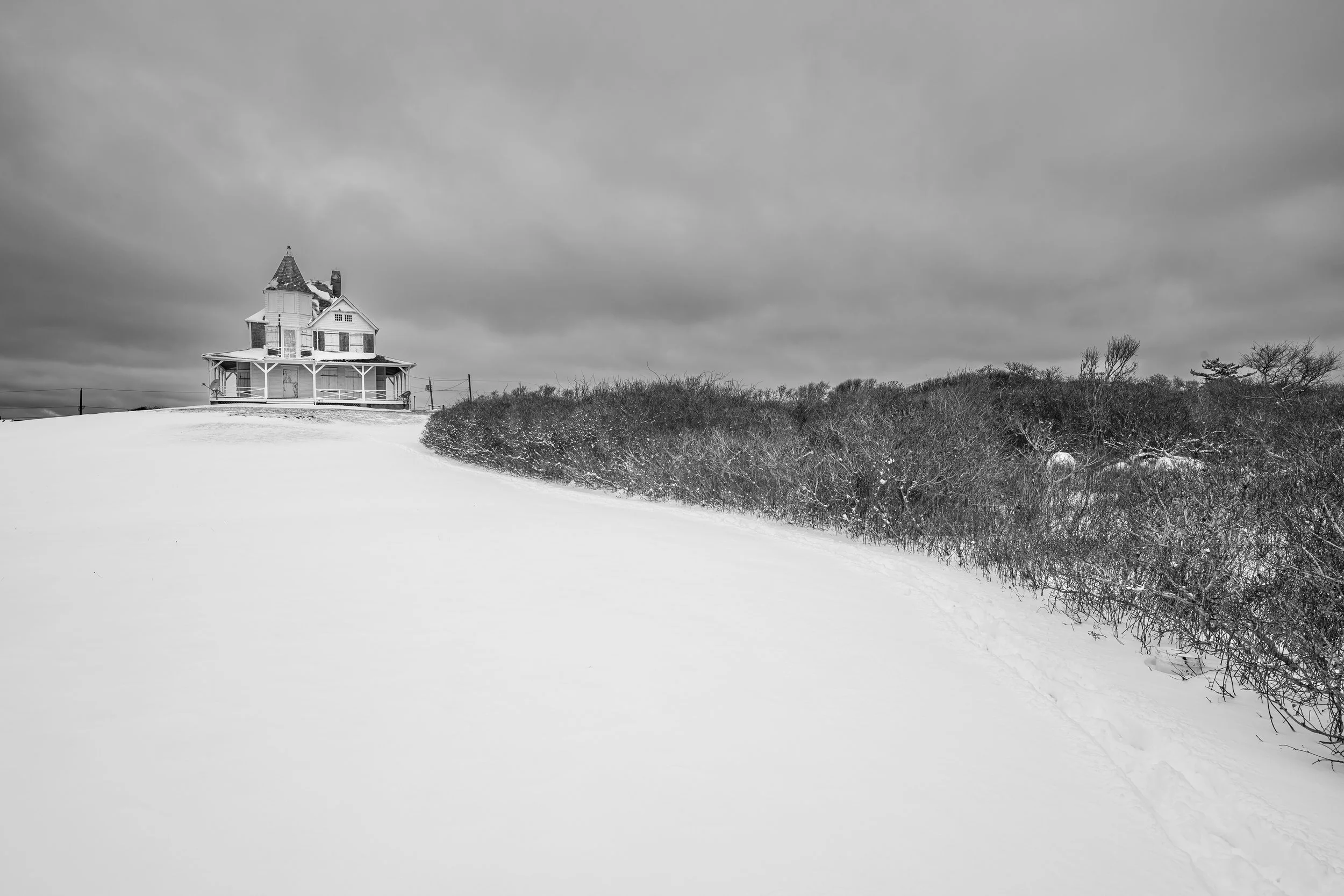
On the Meridian, 2025. The Everett D. Barlow (1847–1889) house, built in 1886 and known as Bit O’Heaven, has been described as a compound of Swiss and Queen Anne styles, typical of Gilded Age summer cottages. It faces due south and is oriented exactly on the meridian, before feng shui entered the Western vocabulary.
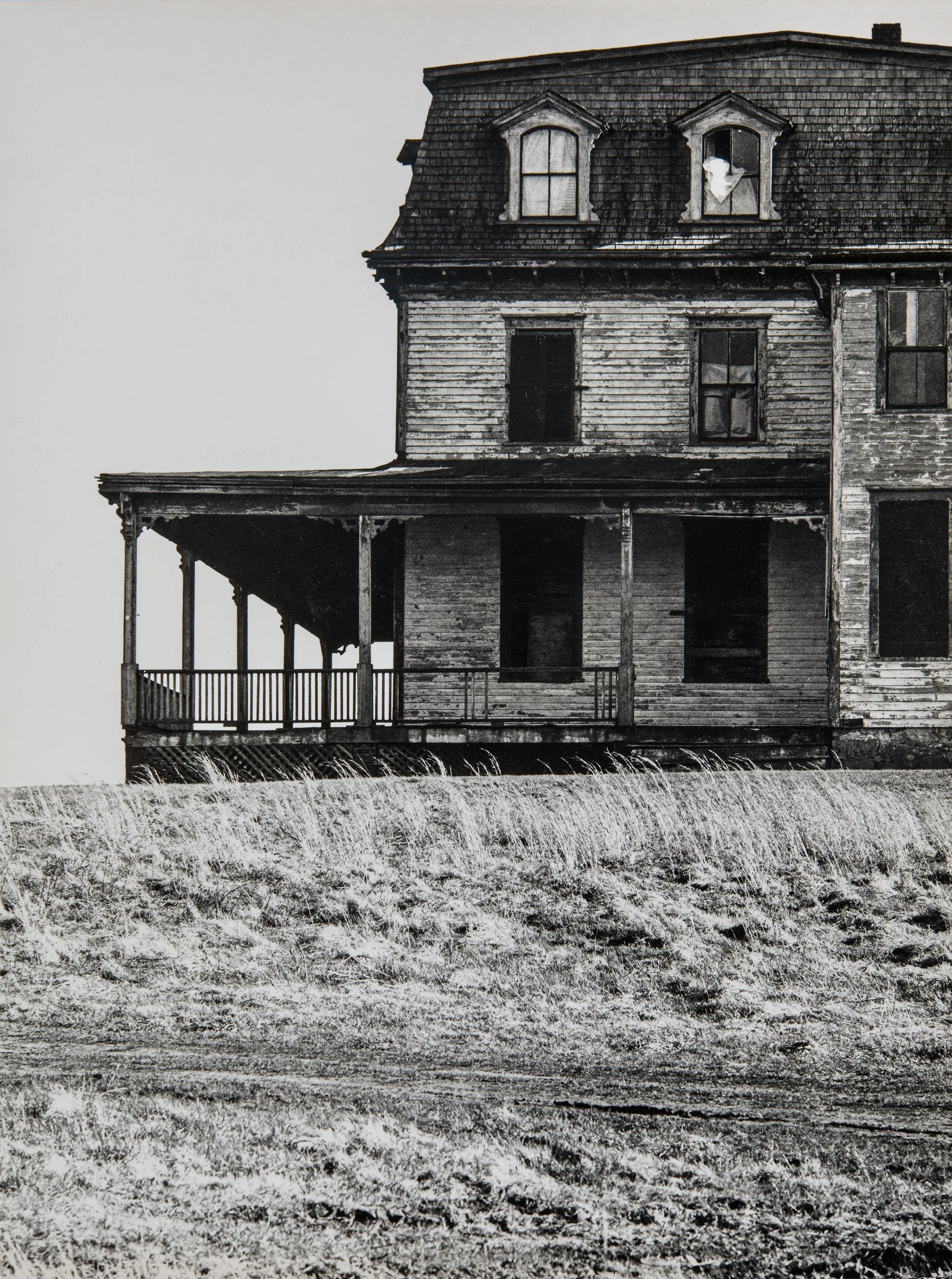
Shamrock Hotel, 1974. Built in 1882 as an annex of the Ocean View Hotel, the Shamrock was torn down in the late 1970s, after years of abandonment. It occupied a site near the present-day post office. This was one of the few photos salvaged from a series taken with a 4 x 5 view camera that had a light leak, which fogged most of the negatives.
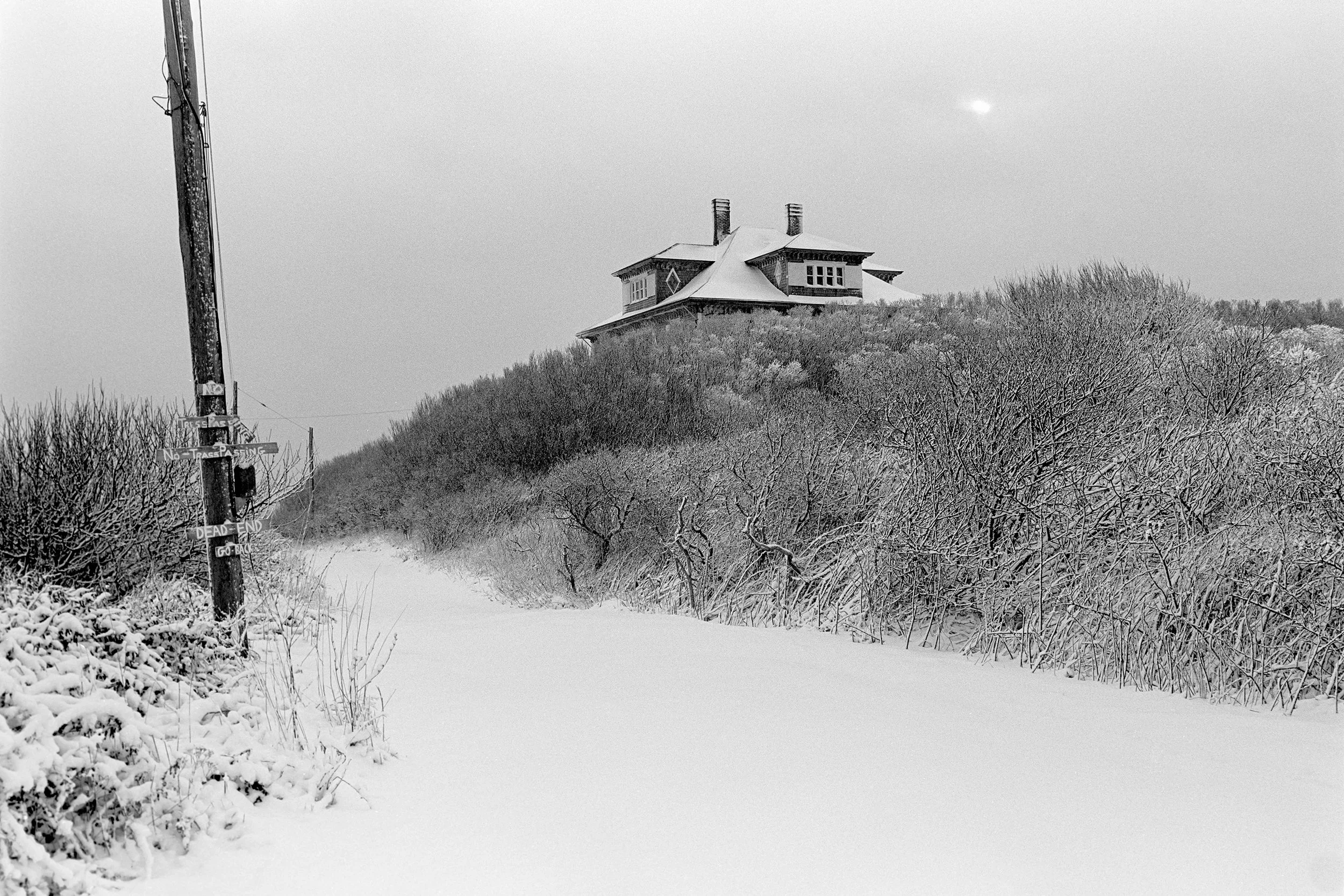
Poplar Lodge, 1978. The foursquare Captain Mark L. Potter house, called Poplar Lodge, was built in 1901. Captain Potter was a retired shipmaster from Brooklyn. The house’s situation above Tilson Cove is prone to erosion, which necessitated moving the house inland in the late 1970s.
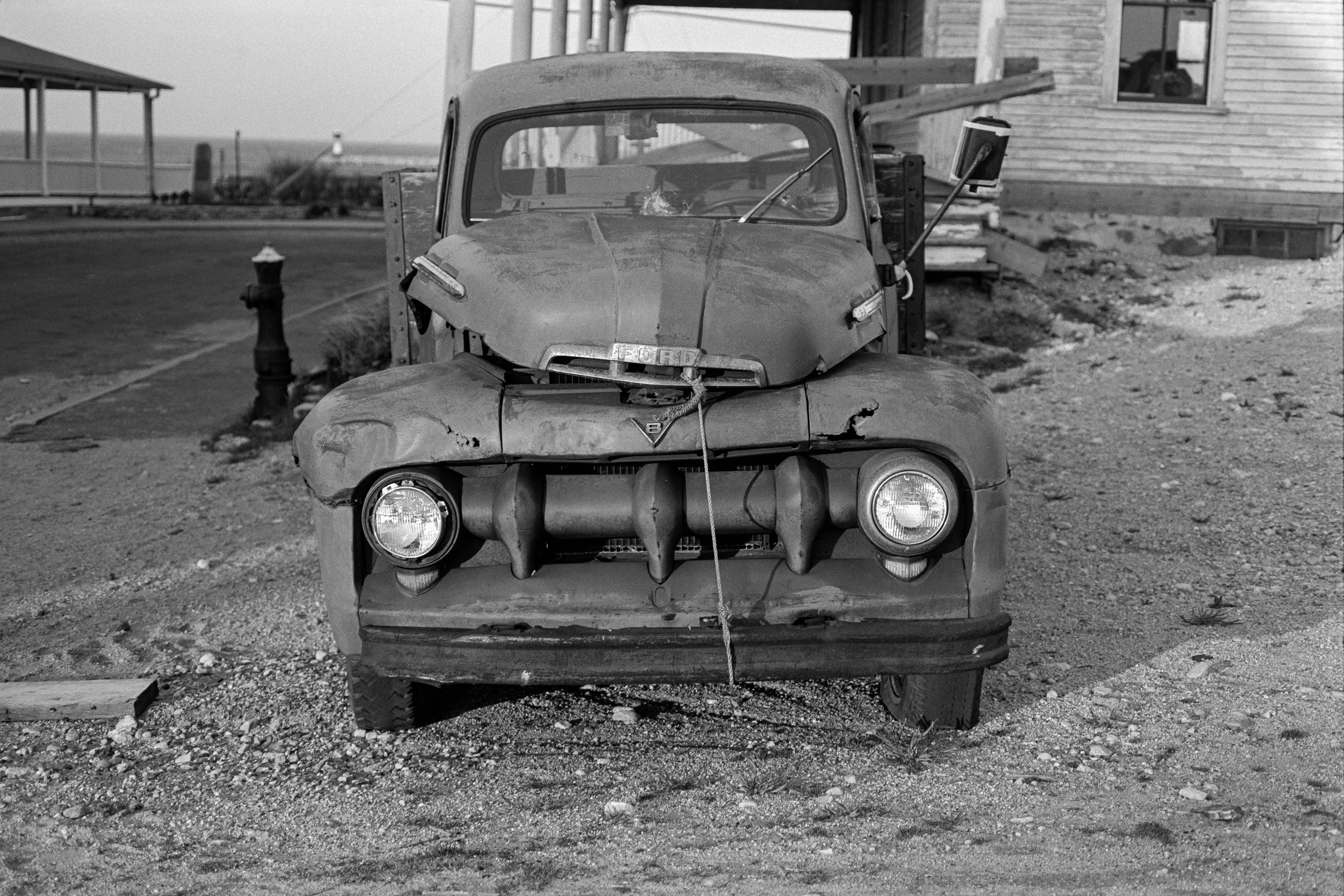
Truck, Dodge Street, 1974. Firepits at the back of the National Hotel now occupy the site of this photo. When it was posted to the Block Island Life Facebook page, it generated a lengthy and lively thread about who the owner might have been. At present, the owner remains unknown.
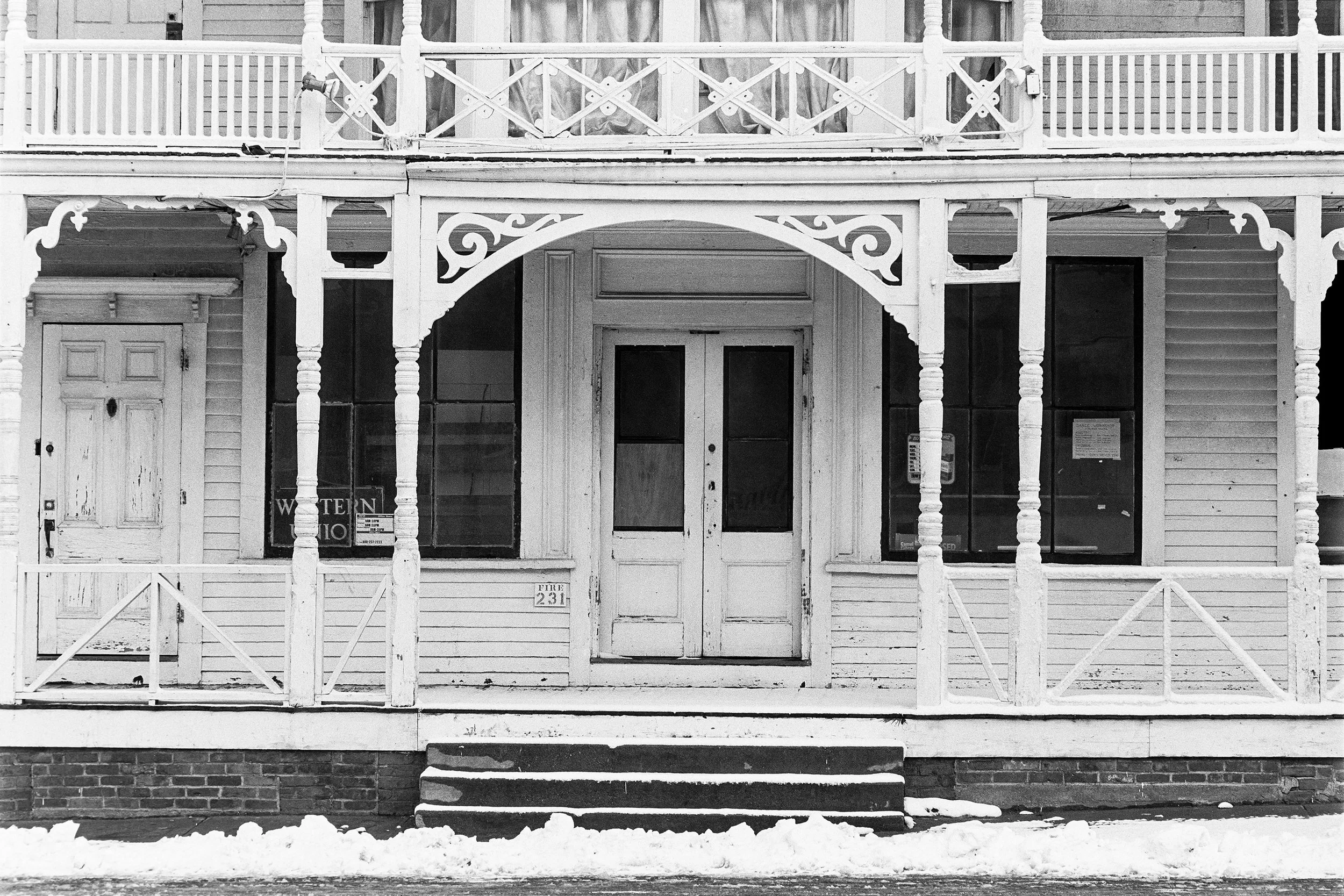
Victorian Porch, Cassius Clay Ball House, 1978. Originally built as a private residence in 1880 (enlarged in 1887), the house faces Rebecca at the Well at the intersections of Water, Spring, and High streets. By 1889, Ball was taking in summer visitors, a trend that continues today as the Inn at Old Harbor.
Lewis Farm, Looking North, 1978 and 2026. In this 1978 panorama (top), the largest structure on the horizon—the Big Barn—had a public pay telephone on the outside, providing the summer residents of this remote enclave their only contact with the outside world. At the time, the fields were active grazing land. When we were photographing this panorama, a buckeroo in Barbour warned us that the cattle could come out at any time and that they were ornery. In 2026, the cattle are gone, and the Big Barn is joined by newer summer houses. The pay phone is no longer.
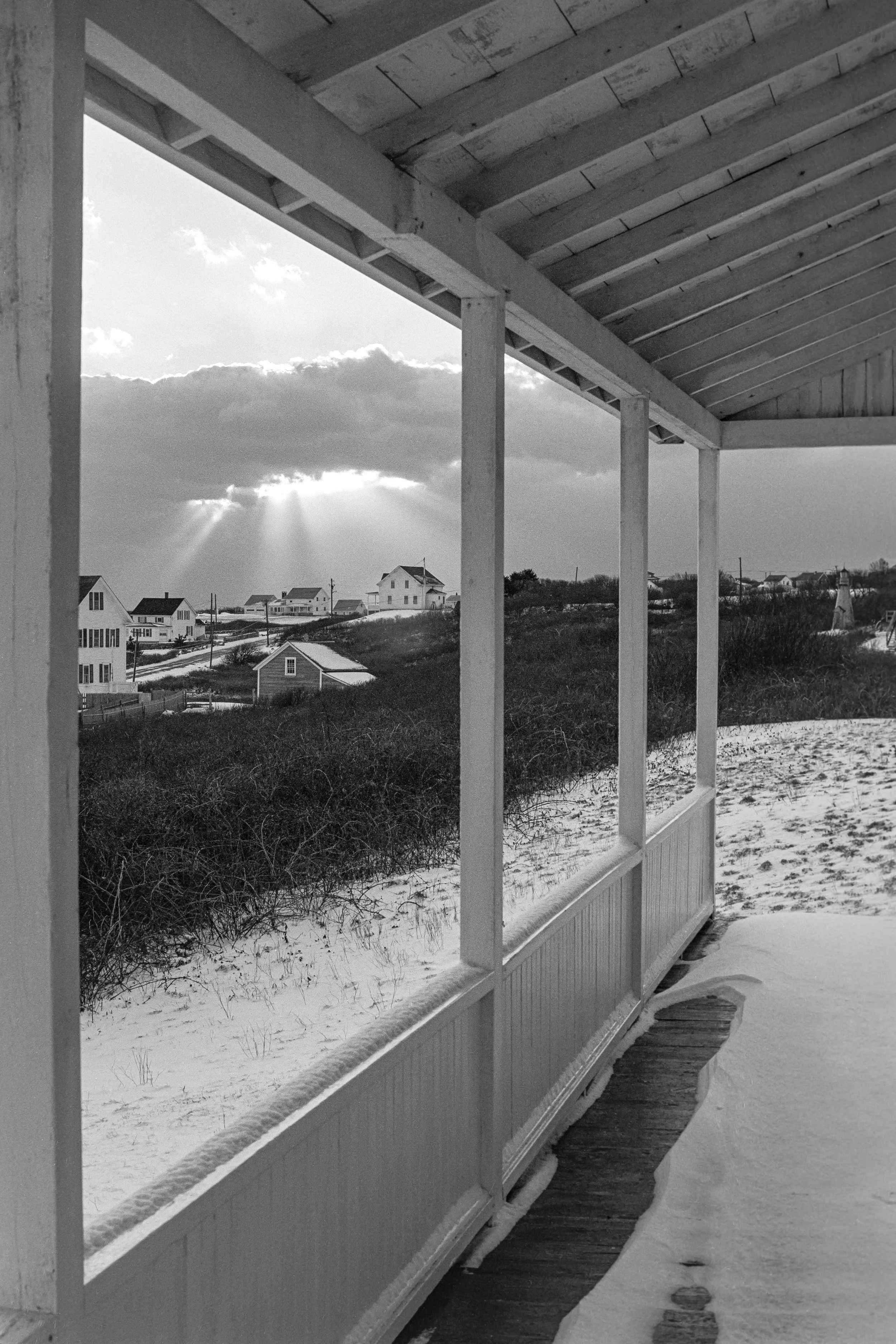
Windward Porch, Sunrise, 1978. Sunrise from the porch of the board-and-batten Gothic Revival Spring House Cottage (circa 1898) is a frequent subject for artists and photographers. In the late 1890s, the house was piped with water from the mineral springs at the Spring House and let as a summer cottage.
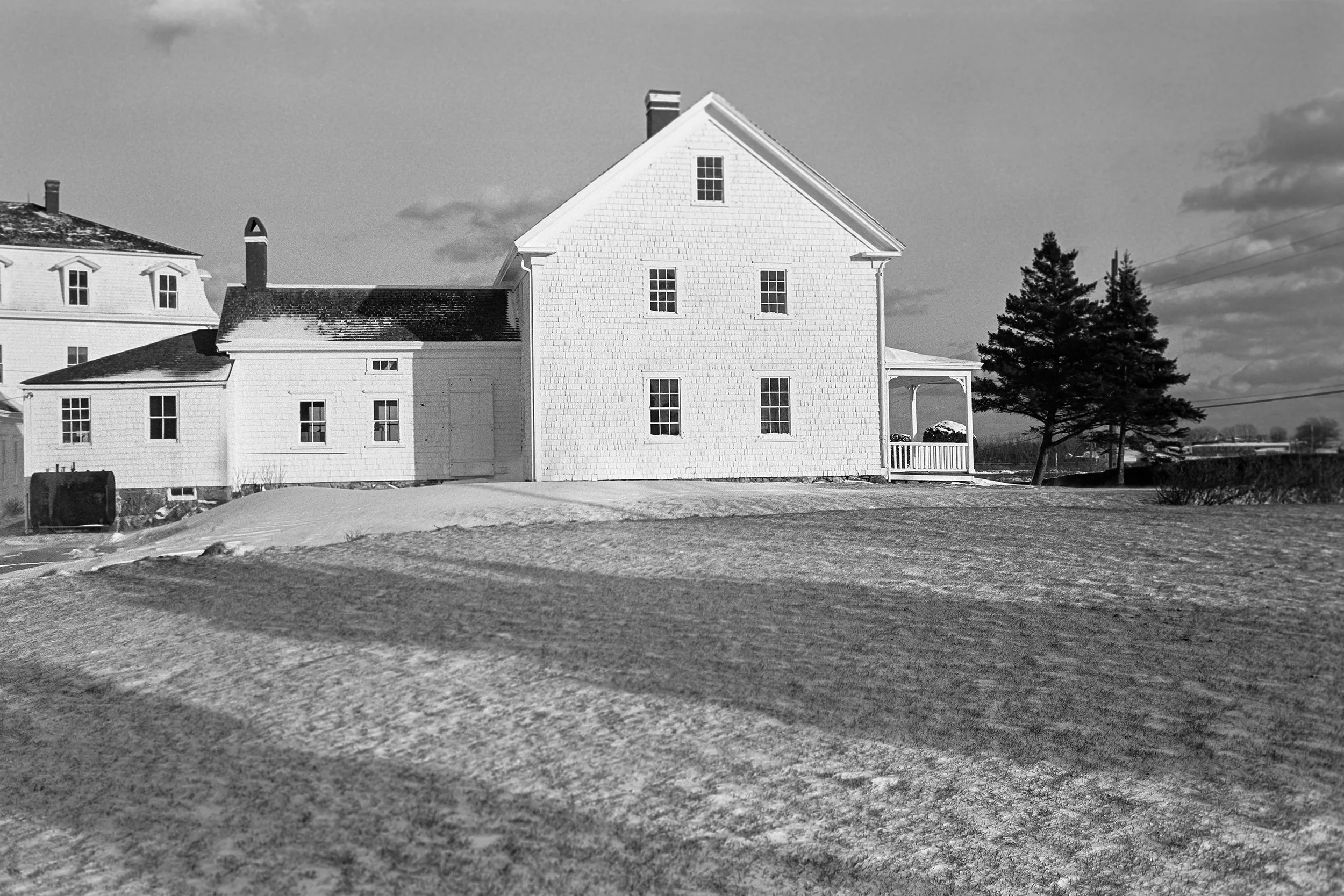
West of the Narragansett, 1978. The center-chimney house of Samuel D. Mott (1841–1908), also known as Lake Shore House, was built in the late 18th century and is one of the oldest two-story buildings on the island. It is now the annex to the Narragansett Inn.
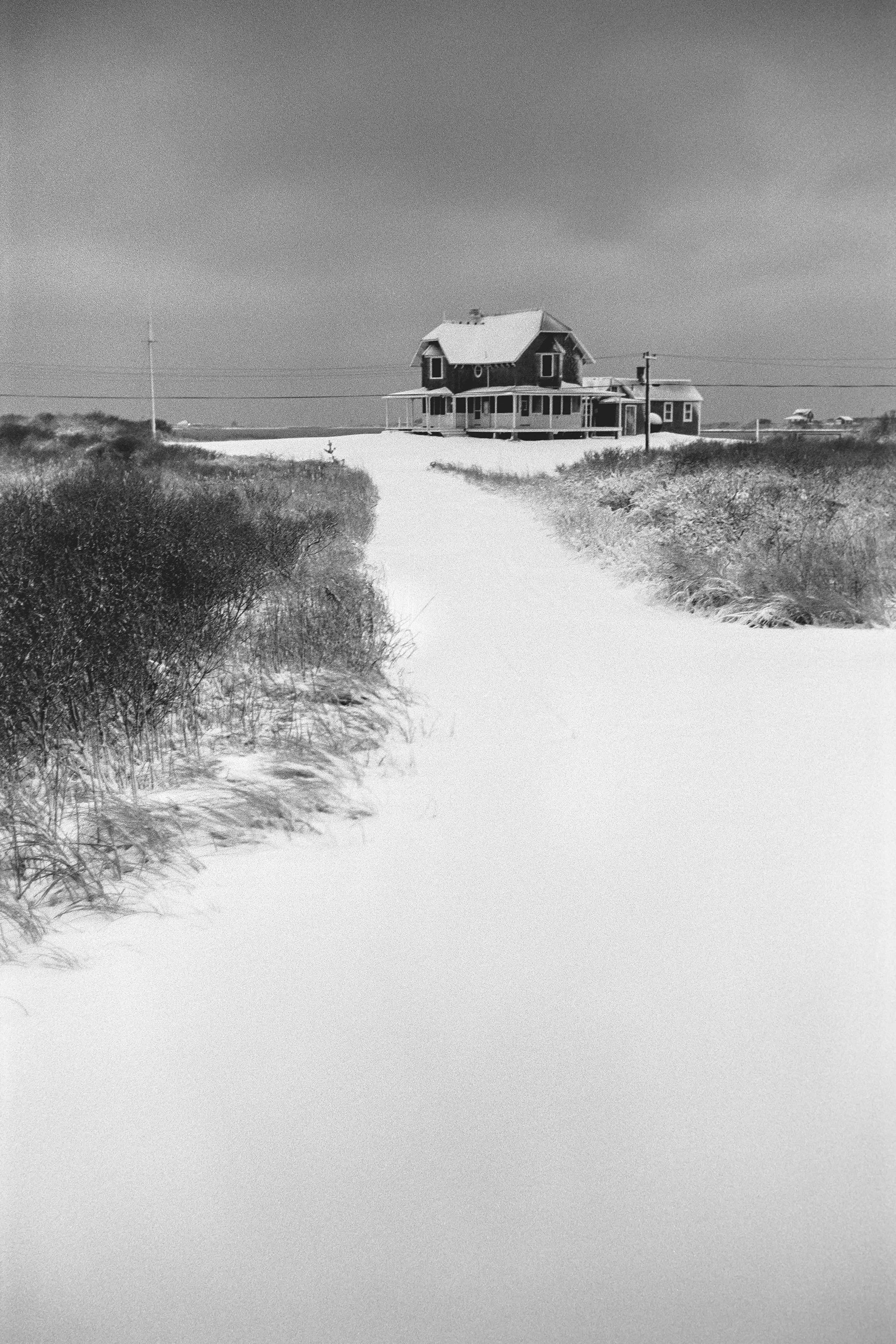
Winter Storm, Innisfail, 1978. Eric and Jim stayed with Barbara and Stanley Nyzio at the Gables in 1978. When a winter storm moved in overnight, Eric was out at first light, taking pictures. Jim was sick with a fever but determined not to lose the opportunity presented by the storm. He threw on his clothes, walked up Corn Neck Road, took this portrait of Innisfail, then went back to bed.
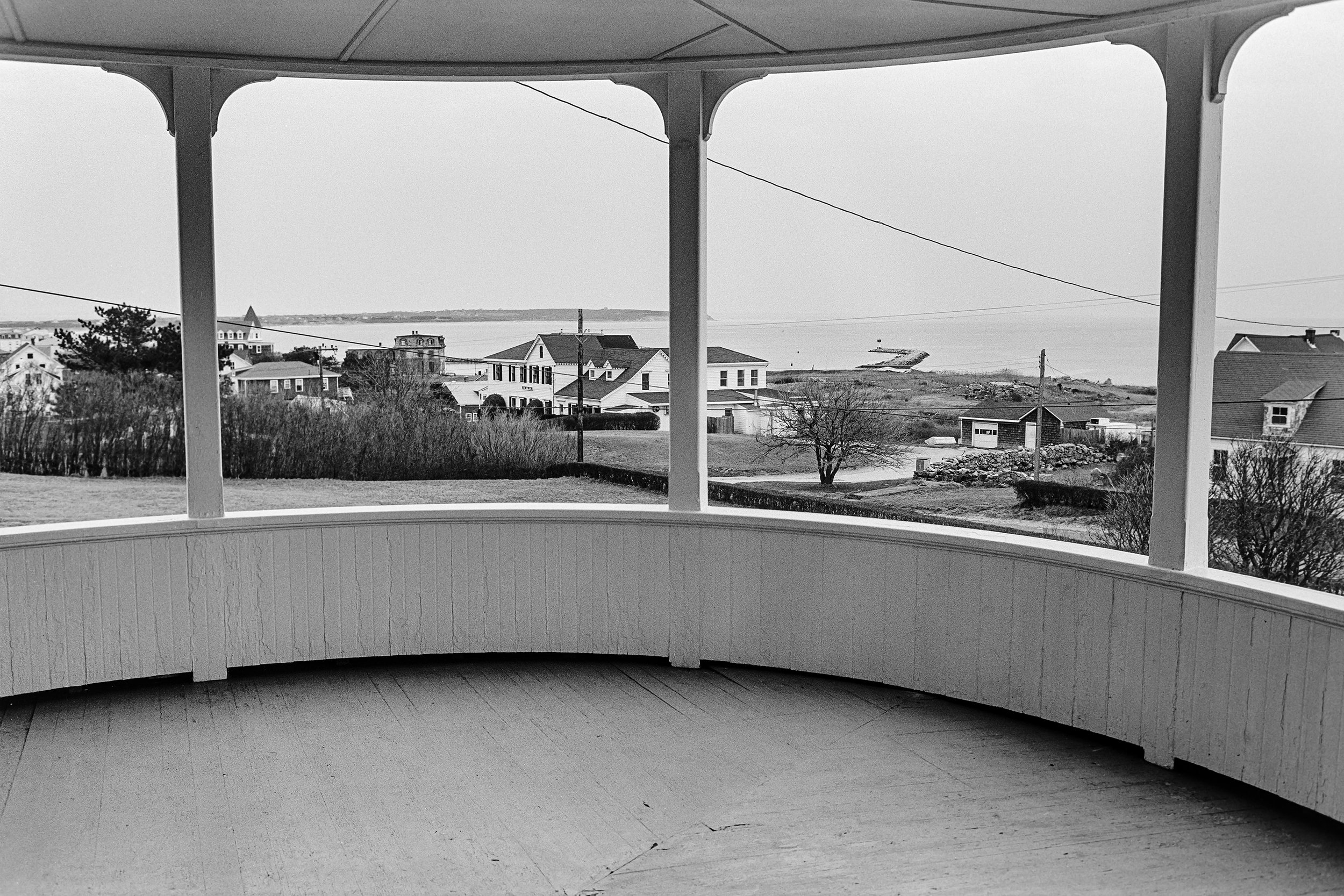
Circular Porch, Theve House, 1977. Theve House was built in 1891 by Arthur D. Ellis, a woolen manufacturer from Monson, Massachusetts. The house is adjacent to the Spring House Annex. Its porch provides a commanding view to the east and northeast. On a clear winter night, you can see the span and lights of the Claiborne Pell Newport Bridge, about 25 miles due northeast. The hulk of the abandoned Shamrock Hotel (built in 1882, torn down in the 1970s) is visible as the mansard-roofed structure toward the center of town.